
Van Life with Pets: Building Your Adventure Companion
Most of our clients travel with dogs. Van life with pets is absolutely doable—it just requires the right build choices. We'll walk you through climate control, flooring, layout, and the systems that actually matter for keeping your pet safe and comfortable on the road.
Van Life with Pets Is the Norm—Not the Exception
If you're thinking about van life with pets but worried it's not possible, let me be direct: it's extremely common. We've converted dozens of vans for clients with dogs, cats, and even birds. The difference between a pet-friendly van and one that isn't comes down to a few core design and system decisions made during the build.
The hard part isn't fitting a pet into a van. The hard part is keeping them safe and comfortable, especially when the van heats up or cools down on a sunny day. That's where most people make mistakes—and where thoughtful design during the build phase pays off.
This guide breaks down exactly what we recommend when we're building a van for clients traveling with pets. We'll cover the systems that matter most, the layout choices that work, common mistakes to avoid, and practical tips we've learned from watching hundreds of people travel full-time with animals.
Climate Control Is #1—Everything Else Comes After
Your pet can't tell you they're overheating. They can't open a window. They can't adjust the thermostat. Climate control isn't a luxury when you're traveling with animals—it's a necessity.
Why This Matters:
A dog left in a hot van can develop heat exhaustion in minutes. Even on a mild 75°F day, a closed van interior can hit 95°F+ in under 30 minutes. In summer, that's lethal. Climate control isn't overengineering—it's the foundation of pet-safe van life.
What We Recommend for Pet Vans
Diesel Heater (Winter + Shoulder Seasons)
A small diesel heater (like an Espar or Planar) is the best way to maintain safe temps year-round without running the engine. It draws minimal power and can run on a small battery system. For pets, the real value is that you can set it to come on automatically when temps drop below a threshold—your dog stays warm all night whether you're awake or asleep.
- • Automatic thermostat control keeps temps consistent
- • Runs independently of engine (quiet, efficient)
- • Standard on most of our builds
Maxxfan with Thermostat Control (Summer + Ventilation)
A roof fan is critical for venting heat, moisture, and odors. A standard fan is basic; a Maxxfan with a smart controller is the upgrade that matters for pets. Why? Because you can set it to automatically turn on when the interior hits a target temperature—say 78°F—and turn off at 72°F. You can leave your van for a few hours knowing the fan will keep things cool.
- • Thermostat-controlled = no manual adjustment needed
- • Works day or night without draining battery fast
- • Critical feature for pet safety on warm days
Insulation + Ventilation Work Together
Good insulation keeps heat in during winter and reduces how fast the interior heats during summer. We use Thinsulate plus XPS foam on floors for consistent R-value. Combined with proper ventilation (Maxxfan), you get stable interior temps that don't swing wildly when the sun hits or clouds roll in. That stability is what keeps pets comfortable.
Optional: Secondary Temperature Monitor
Some clients add a wireless temp sensor that sends readings to a phone app. You're out at dinner, and you can check the van's internal temperature without going back. It's not essential, but for pet owners nervous about leaving their dog even briefly, it's peace of mind. Not available on all builds, but worth asking about during quoting.
Learn more about van climate systems on our climate control page.
Flooring: Choose Easy-to-Clean, Durable Materials
Pets shed, track mud, and occasionally have accidents. Your van flooring needs to handle all of that without falling apart or trapping odors.
Vinyl Plank or Marine-Grade Flooring (Best for Pets)
Waterproof, scratch-resistant, and incredibly easy to clean. Spill water? Wipe it up. Muddy paws? Damp cloth. Accidents? Clean immediately without worrying about staining or rot. This is the standard for pet vans because it actually works.
Never Carpet (Even if You Love It)
Carpet absorbs liquids, traps odors, gets stained by paws, and requires constant shampooing to stay clean. With pets in a van, carpet becomes a liability. Hardwood or carpet-look luxury vinyl (LVP) that mimics wood grain is a better compromise if you want the aesthetic without the maintenance nightmare.
Pro tip: Consider a darker color or neutral tone that hides dirt between cleaning. Lighter vinyl shows paw prints and dust constantly, which gets annoying on a 12-week road trip.
Layout & Design: Building Space for Your Pet
Where does your dog sleep? Where does their food and water go? How do you secure them while driving? These questions shape the entire interior layout.
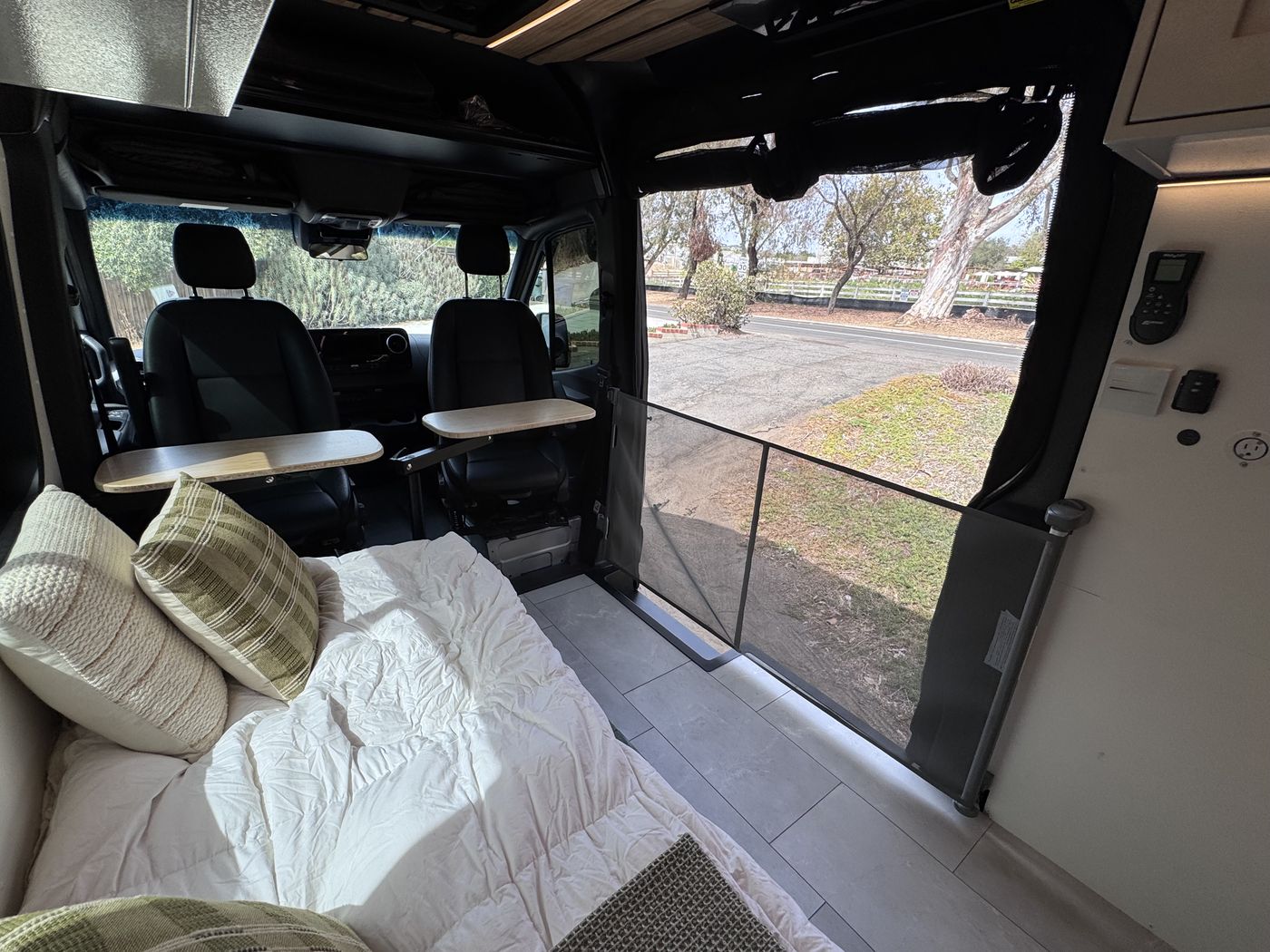
Grove has a retractable gate across the sliding door, so the dogs get the open door and the breeze without getting out. Both cab seats swivel to tables. See the Grove build.
Key Layout Elements for Pet Vans
Dedicated Pet Sleeping Area
A crate or enclosed sleeping space under the main bed, or a cushioned pet platform gives your dog their own territory. Dogs (especially larger breeds) appreciate having a defined space they can retreat to. It also makes it easier to secure them during driving or rough weather.
Food and Water Station That Won't Spill
Bowls sliding across the floor while you're driving are a mess and a distraction. Elevate them (higher bowls are better for digestion anyway) or integrate them into a dedicated shelf or cabinet with lips that keep spills contained.
Pro move: Use collapsible bowls that take up minimal space when not in use, and store them in a cabinet near your pet area.
Harness Anchor Points or Secure Crate Space
An unsecured dog sliding around during sudden stops or bumpy roads is dangerous for them and distracting for you. We can integrate anchor points for harnesses into the floor or benches, or frame in a solid crate space. Discuss this during your consultation so we build it right.
Storage for Pet Gear
Leashes, food, treats, medications, vet records, toys, first aid supplies, a brush, a vacuum for shedding—it all needs a home. Dedicating a cabinet or closet space to pet gear keeps things organized and accessible. If you're not planning for this, you end up living around piles of stuff on the floor.
Water System: More Capacity Than You Think You Need
Dogs drink way more water than you might expect. Dehydration is a real risk on the road, especially in hot climates.
Water for Pets
Drinking Water
A medium-sized dog (40–60 lbs) drinks about 1.5 gallons per day. Two dogs? 3 gallons. Add 1–2 extra gallons for flushing bowls, cleaning, and washing off. Many clients with pets upgrade from a 50-gallon system to 75–100 gallons to avoid refilling constantly in the backcountry.
Outdoor Shower or Rinse Attachment
An outdoor shower head with a long hose lets you rinse muddy paws without bringing dirt inside. It's standard on most van builds, but if you have pets, it's absolutely essential. Less essential as a shower for you, more essential as a pet washing station.
Learn more about water systems and sizing on our plumbing page.
Ventilation: More Than Just Air Movement
Dogs produce odors. Moisture accumulates. Stale air gets stale fast in a small space. Proper ventilation keeps the van feeling fresh and helps prevent mold and mildew.
Roof Fan (Maxxfan Preferred)
We talked about this under climate, but it's worth repeating: a roof fan does double duty—cooling and deodorizing. A thermostat-controlled fan keeps the interior fresh without you having to remember to turn it on.
Window Screens (Important for Fresh Air)
Opening windows brings fresh air, but you can't leave them wide open with a dog—they could escape or get hit by branches. Sturdy window screens let you crack windows without worry. Standard on all our builds, but mention it during design if you travel with pets.
Exhaust Fan in the Bathroom (if Applicable)
If your build includes a wet bath or toilet, an exhaust fan is essential to manage moisture and odors. Especially important in vans with pets, where humidity and lingering odors compound.
Safety Systems: Carbon Monoxide, Temperature, and Securing Your Pet
Carbon Monoxide Detector (Mandatory)
Every van should have a CO detector, especially if you run a diesel heater. Pets are more sensitive to CO poisoning than humans, so this isn't optional. We include one on all builds; if you don't have one, add it before your first night in the van.
Temperature Monitoring
A simple indoor/outdoor thermometer (around $20) is the cheapest insurance policy. You check the van before leaving your dog even briefly. An upgraded wireless temp monitor (mentioned earlier) is a luxury for nervous pet owners.
Securing Your Pet While Driving
A dog sliding around the van during hard braking is unsafe for them and dangerous for you. Build-in anchor points for a harness, or frame space for a solid travel crate. We can design this into your build—just tell us you have pets during the consultation.
Pet First Aid Kit
Bandages, gauze, anti-inflammatory, tweezers for splinters, tweezers for ticks, thermometer, saline solution. Keep it with your own first aid supplies. Out in remote areas, you might be hours from a vet. Before you hit the road, it's worth finding a vet who's upfront about costs and treatment options — Spectrum Care can help you connect with vets who treat budget as a normal part of the conversation.
Outdoor Setup: Shade, Anchors, and Comfort
Awning or Shade Structure
A large awning is incredibly valuable if you have pets. Your dog can hang out outside in the shade without the sun beating down. It extends your usable space and gives your pet a comfortable place to rest during the day.
Tie-Out Anchor Points or Cable Run
A metal anchor point bolted to the van's frame lets you clip a leash or cable so your dog can move around outside without being held. A cable run (like clothesline) is even better—your dog has more freedom to roam while camping.
Make sure anchors are secure; a panicked dog can break a cheap anchor point.
Outdoor Mat or Designated Area
A rubber mat under your awning gives your dog a designated outdoor space to lie on. It's cleaner than dirt and easier to rinse off muddy paws before coming back inside.
Common Mistakes Pet Owners Make
We've seen what works and what doesn't. Here's what to avoid:
1. Not Planning Ventilation Early
If you don't specify your roof fan setup during the design phase, you end up with a basic fan that's not thermostat-controlled. By the time you're on the road, it's too late. Mention pets during your consultation so we design proper ventilation in.
2. Leaving Pets Unattended Without Climate Control
The number-one cause of pet emergencies in vans is heat. Never leave your dog in a closed van without automatic climate control running. Even 15 minutes on a sunny day can become dangerous.
3. Underestimating Water Needs
People often install 50-gallon tanks and then realize they're refilling every 3–4 days because of pet water use. A dog in the heat drinks a lot. Add extra capacity if you have pets—you won't regret it.
4. Choosing Carpet or Sealed Wood Flooring
Carpet absorbs accidents and odors. Sealed wood stains easily and scratches with claws. Vinyl plank is the only flooring that actually works long-term with pets. If you love the look of wood, get luxury vinyl that mimics it.
5. Not Securing Pets While Driving
A dog loose in a van during hard braking can get seriously hurt. Build in anchor points or crate space from the start. This is a design decision, not an afterthought.
6. Forgetting About Camping Restrictions
Many national parks have pet restrictions or dog-free zones on trails. BLM land and national forests are usually pet-friendly. Know the rules before you arrive. Some areas require pets to be on-leash at all times; others prohibit them entirely. Plan accordingly.
What About Cats? Van Life with Felines
Cats in vans are less common, but it happens. Most of what we've covered applies—climate control, ventilation, water. But cats have a few unique needs:
Litter Box Placement
Cats need a dedicated, private space for their litter box. This usually means a bathroom or enclosed area. If your build doesn't have a dedicated bathroom, you'll need a portable setup that's easy to clean and not in everyone's way.
Window Screens and Secure Openings
Cats escape through the smallest gaps. Make sure all windows have secure screens and that your roof vent has a cover so your cat can't slip out. This is non-negotiable if you're parking in remote areas.
Climate Control (Same as Dogs)
Cats overheat even faster than dogs. Climate control is as critical for a cat as it is for a dog. In fact, you might prioritize it even higher with a cat because they're smaller and more vulnerable.
Secured Space During Driving
A cat roaming loose during driving is even more dangerous than a loose dog. A carrier, crate, or secured corner is necessary. Some cats do fine; others panic. Plan for the worst-case scenario.
The Bottom Line
Van life with pets is completely doable. We build them regularly, and our clients' dogs and cats thrive on the road. The difference between a pet-friendly van and one that isn't comes down to intentional design during the build process.
Climate control is your foundation. Good flooring, layout that works for your pet, adequate water, and proper ventilation are the systems that matter. Plan these during your consultation, and you'll have a van that actually keeps your companion safe and comfortable—not just a van you hope works out once you're traveling.
If you're ready to build a pet-friendly van, let's talk. Tell us about your dog or cat, your travel plans, and your budget. We'll design a build that works for you both.
Related: All Van Life Guides • Systems & Guides
Ready to Build Your Pet-Friendly Van?
Tell us about your van, your pet, and your plans. We'll walk you through the build choices that actually matter for traveling safely with animals.
Tell Us About Your Build