
How Much Does a Van Conversion Cost? Full Price Breakdown
Real van conversion costs from an Encinitas custom build shop. Pricing by budget, system, and platform with actual 2026 build numbers.
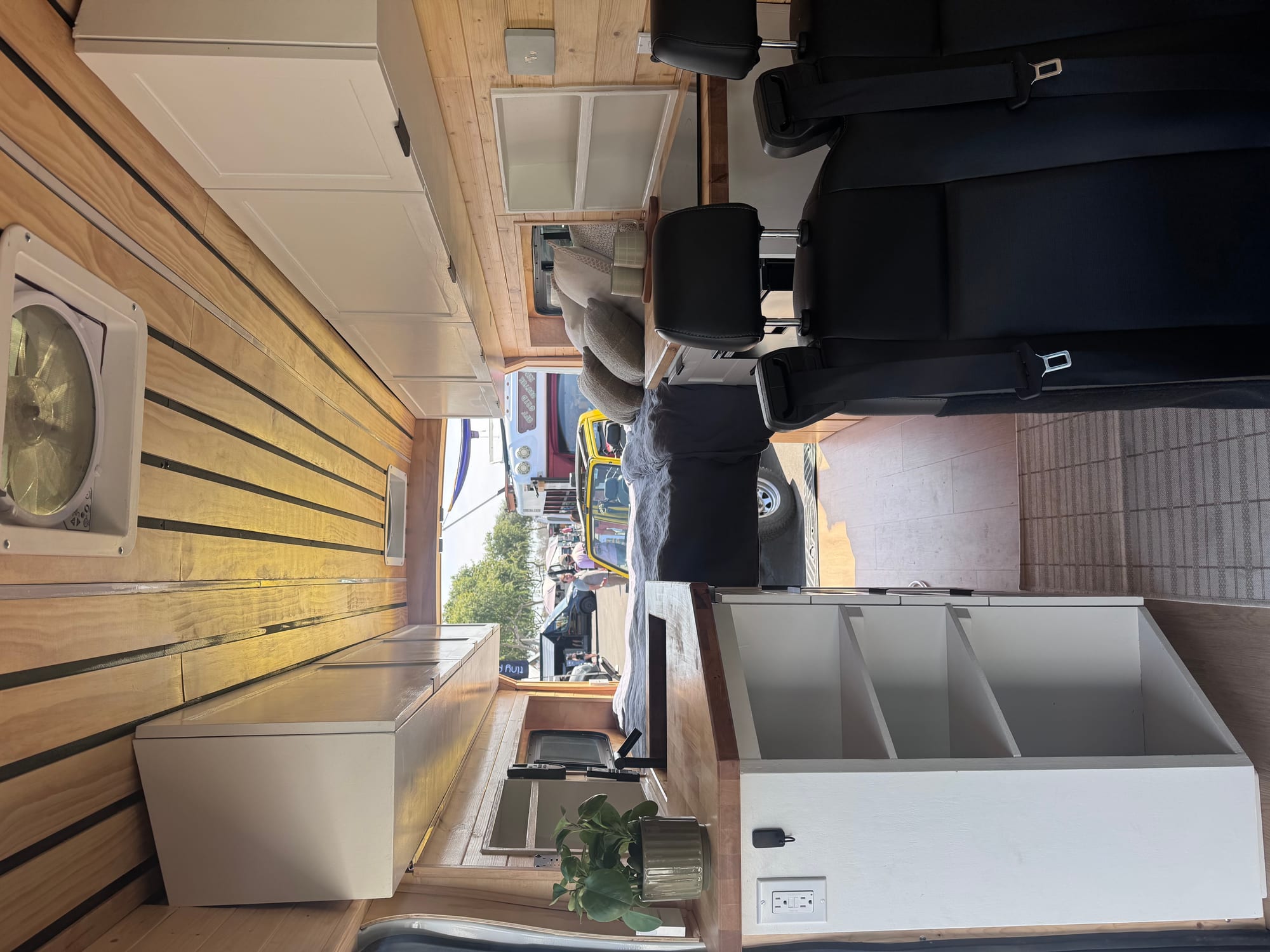
“How much does a van conversion cost?” We hear this more than any other question. The short answer is that it depends on your van, your build level, and what systems you want. But that is not a useful answer, so we put together this full breakdown using real numbers from our shop in Encinitas.
We have built Sprinter conversions, Transit conversions, and ProMaster conversions at every price point. The numbers below are what builds actually cost in 2026, not internet forum guesses or recycled blog posts from five years ago.
What the Van Itself Costs
The vehicle is often the single biggest line item in your total budget. Here is where the three major platforms sit right now.
New Van Pricing (verified August 2026)
| Platform | MSRP Range (Cargo) | Notes |
|---|---|---|
| Mercedes Sprinter | $51K–$60K | Most expensive. AWD adds $9,670 — see below. |
| Ford Transit | $51K–$58K | Mid-range. Only platform with EPA fuel ratings. AWD adds ~$3,900. |
| RAM ProMaster | $49K–$60K | Cheapest new base model. Front-wheel drive only. |
On the Sprinter AWD number: you will see “$6,800” quoted for Sprinter AWD in a lot of places, and it is half the story. AWD is only offered with the High Output diesel, so moving to AWD from the price Mercedes advertises means paying for the engine upgrade and the AWD. Against the same High Output configuration it is $6,820. Against the starting price you actually saw, it is $9,670. Budget the $9,670.
Used Van Pricing (Rough Bands)
Used van pricing varies heavily with age, mileage, and condition. Expect roughly 85–90% of MSRP at 1 year, 65–75% at 3 years, 50–60% at 5 years, and 35–50% at 7+ years. Always verify a specific listing against KBB or Edmunds.
| Platform | Typical Used Range | Notes |
|---|---|---|
| Mercedes Sprinter | $25K–$55K | Diesels hold value best. AWD and 4x4 models carry a premium. |
| Ford Transit | $22K–$43K | AWD (2020+) holds value better than RWD at the same mileage. |
| RAM ProMaster | $18K–$40K | Depreciates faster than Sprinter/Transit (smaller buyer pool). |
A few things worth knowing:
- Sprinter AWD vs. 4x4. The 2023+ models dropped the low-range transfer case, so if off-road capability matters, older models with mechanical low range hold their value.
- Gas Sprinters are done. Discontinued after 2023. All new Sprinters are diesel only. If you want gas, you are shopping used.
- ProMaster has no AWD from the factory. Rare aftermarket conversions exist but are expensive and complex.
- Transit is the only one with an official EPA fuel economy rating. Sprinter and ProMaster do not carry ratings due to their weight class.
- High mileage is normal on used cargo vans — 150K+ is common. Don’t assume low miles just because a van is used.
Professional Van Conversion Pricing
We use three budget bands to set expectations. They are not packages you pick from, and we do not sort customers into them. Every build is a one-off, quoted from your layout and your system list.
| Budget band | Price Range | Timeline | Who It’s For |
|---|---|---|---|
| Smaller build | $30K–$50K | 6–8 weeks | Weekenders and simple layouts that still need real systems |
| Mid-range build | $55K–$75K | 8–12 weeks | Full-time capable with complete systems |
| Higher-end build | $80K–$120K+ | 12–16+ weeks | High-end finishes, complex systems, fully custom |
All prices are labor and materials. Vehicle not included.
Smaller build ($30K–$50K)
Insulation (Thinsulate + XPS foam on floors), wall and ceiling panels, a complete electrical system with a house battery and LED lighting, functional plumbing, a sleeping platform, and basic cabinetry. This is a real camper van — not a stripped shell with a mattress. Built for weekend trips and short adventures where you want comfort and reliability without going full-time.
Mid-range build ($55K–$75K)
All of the above plus solar, a kitchen with a cooktop and sink, a freshwater system with a pump, a proper bed with storage underneath, climate control (typically a diesel heater), and finished cabinetry. This is where most full-time builds land. You can live in a van at this level comfortably for years.
Higher-end build ($80K–$120K+)
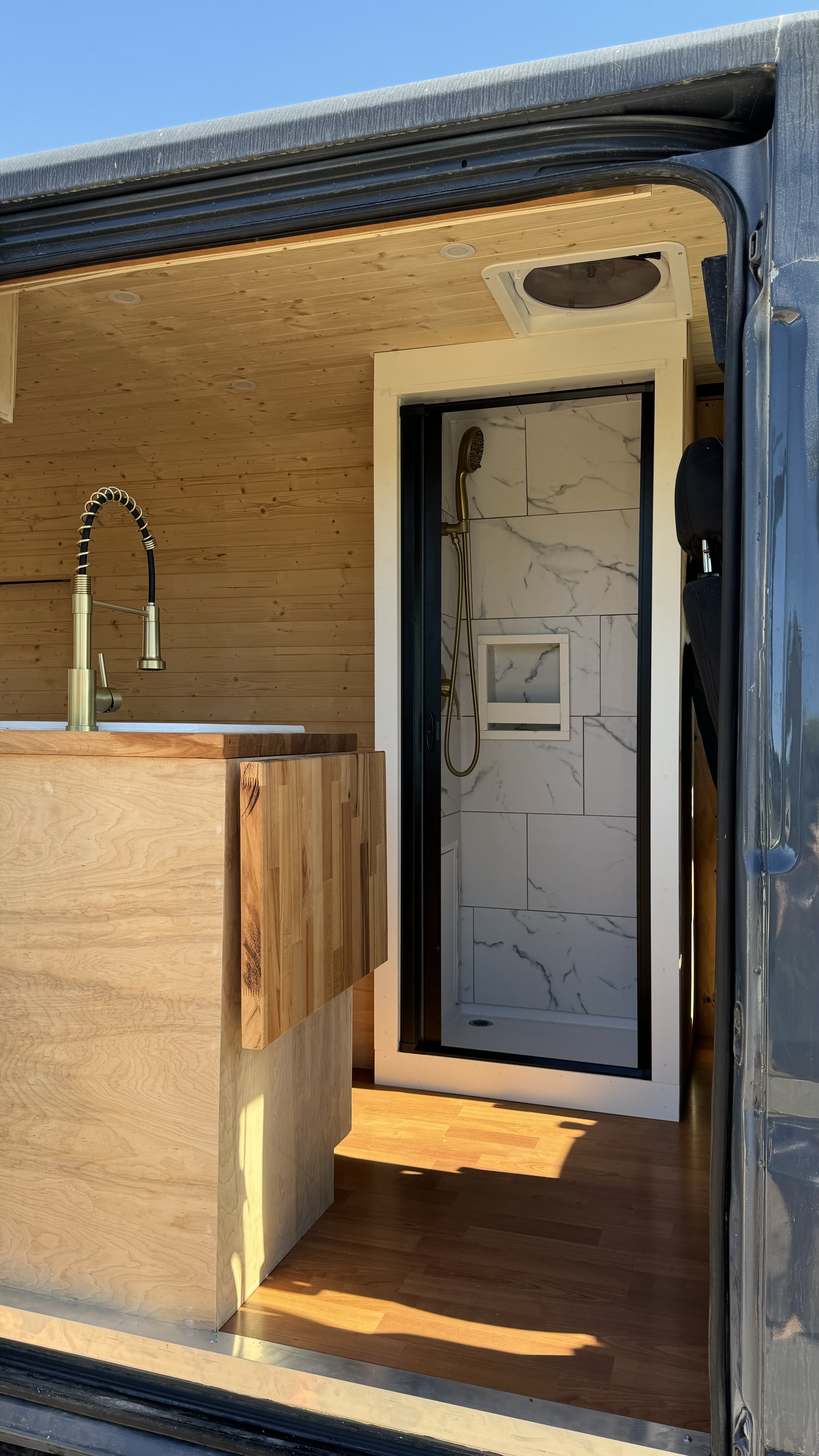
All of the above plus high-end materials and finish work, a bathroom with a shower, upgraded electrical with lithium batteries and a large inverter, a hot water system, better climate control, custom exterior upgrades, and cabinetry built to your exact specifications. The jump to this level is less about bigger components (you’re already at the ceiling on inverter, tanks, etc.) and more about craftsmanship — the hundreds of small details that make a van feel truly finished.
Where the Money Goes: Cost Breakdown by System
Understanding where each dollar goes helps you make better decisions about what to prioritize. Across the whole range, four systems drive most of the cost.
Interior is always the biggest number
Cabinetry, the bed system, flooring, wall panels, and all the finish work. This is where the difference between a $30K build and a $100K build really shows up. Material choices matter. Birch plywood and simple hardware vs. premium hardwood and soft-close everything. Layout complexity matters too. A straightforward rear bed with a galley kitchen is a very different project than an L-shaped dinette with a garage underneath.
Electrical is the second biggest system
A single house battery with some LED lights is straightforward. But once you add solar panels, a lithium battery bank, a 2000W or 3000W inverter, shore power, a DC-to-DC charger, and a proper distribution panel, the cost adds up fast. If you plan to work remotely from the van or run an air conditioner, the electrical system is one of the most important investments you will make.
Plumbing depends on how far you want to go
A simple gravity-fed sink is one end of the spectrum. A full system with a pressurized pump, hot water heater, outdoor shower, and gray water management is the other end. How much water infrastructure you want is one of the biggest planning decisions in a build.
Exterior accessories add up
A quality roof rack alone runs $1,500 to $3,000 depending on the platform. Add a ladder, solar panel mounts, tire carrier, and side steps and you are looking at real money. Worth budgeting for these separately from the interior work.
How the Van Platform Affects Build Cost
The van you choose affects more than just the vehicle price. Some platforms are easier and cheaper to build in than others.
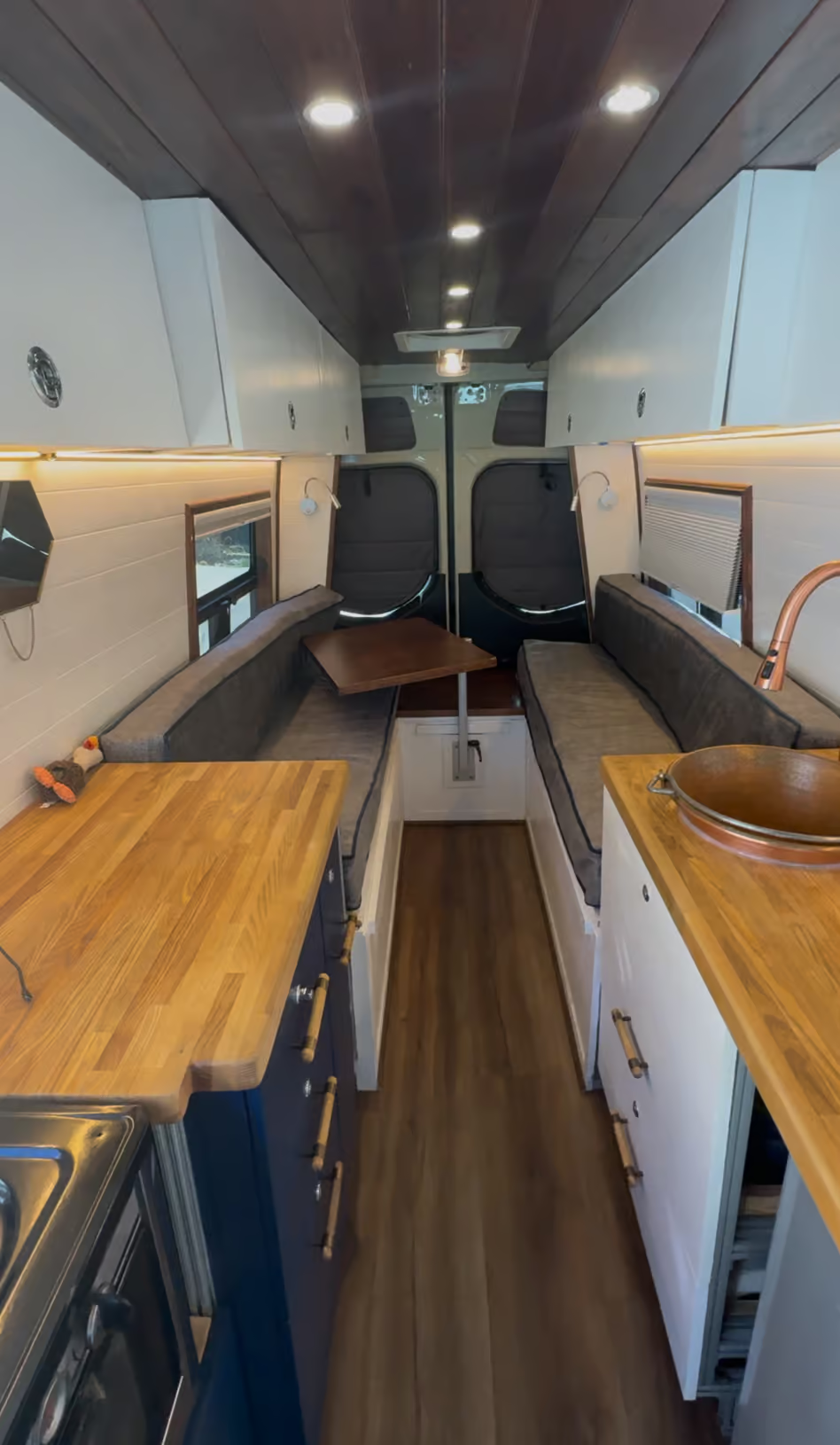
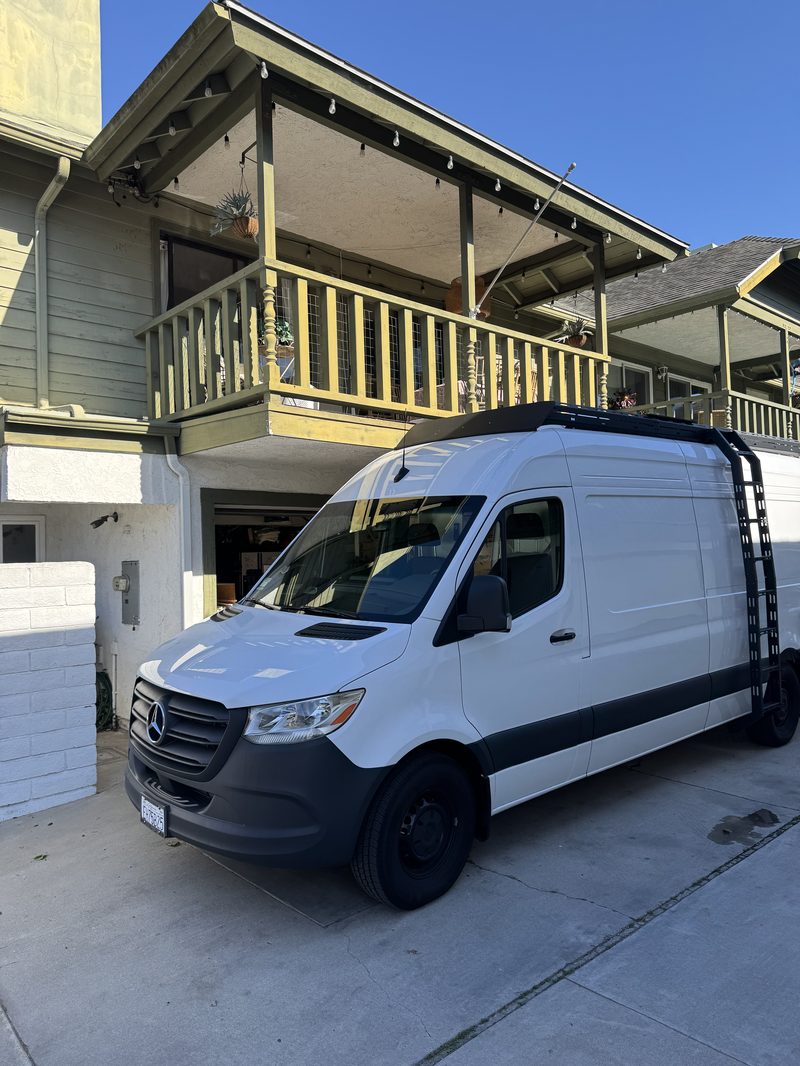
Mercedes Sprinter
The Sprinter is the most popular platform for van conversions and the most expensive at every step. The van costs more, Sprinter-specific parts and accessories run higher, and maintenance costs more. But the tall ceiling, wide body, and strong aftermarket support make it the top choice for full-time builds.
- Vehicle: $51K–$60K new / $25K–$55K used
- Total range: $55K (used van, simpler build) to $180K+ (new van, higher-end build)
Ford Transit
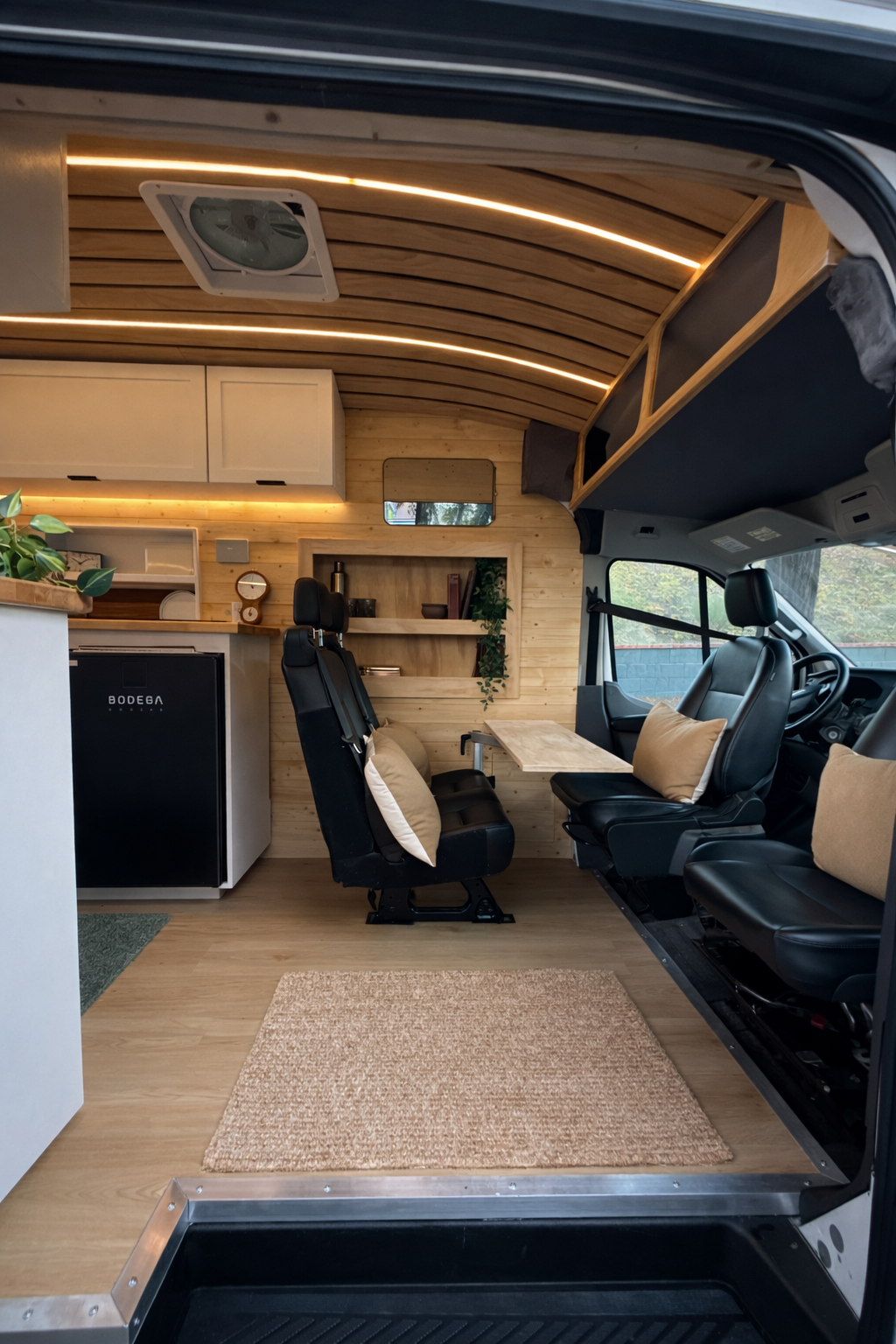
The Transit sits in the middle on price and is the only major platform with official EPA fuel ratings. The AWD system (available since 2020) is solid and less expensive than Sprinter AWD. The bolt-together body panels also make some repairs easier down the road.
- Vehicle: $50K–$57K new / $22K–$43K used
- Total range: $52K (used van, simpler build) to $177K+ (new van, higher-end build)
RAM ProMaster
The ProMaster is the value play. Lowest vehicle cost, the widest interior of the big three, and the cheapest parts. The trade-off is no factory AWD and a body style some people find less attractive. But from a pure build standpoint, that wide floor is an advantage that can reduce labor on some interior layouts.
- Vehicle: $47K–$58K new / $18K–$40K used
- Total range: $48K (used van, simpler build) to $178K+ (new van, higher-end build)
DIY vs. Professional: An Honest Comparison
We are a professional build shop, so take this with that context. But we will be straightforward about the trade-offs because we would rather you make the right call for your situation than sell you something you do not need.
A DIY build can save 40 to 60 percent on labor. If you are handy and have tools, a simpler DIY might run $12K to $22K in materials. A more complete one could be $25K to $40K.
But there are real costs beyond materials:
- Time. Most DIY builds take 6 to 12 months of evenings and weekends. Some take longer. That is time you are not traveling.
- Tools. If you do not own a shop setup, expect $1K to $3K on tools you may never use again.
- Mistakes. Material waste from learning curves adds up. Cutting a $200 sheet of plywood wrong or running the wrong wire gauge gets expensive.
- No warranty. If something fails on a professional build, you call us. If something fails on a DIY, you fix it.
- Resale. Professionally built vans command higher resale prices because buyers trust the workmanship.
Costs Most People Forget to Budget For
The vehicle and the build are the two biggest numbers, but they are not the only ones. These catch a lot of first-time buyers off guard.
Registration and titling can run $500 to $2,000 depending on your state. In California, RV registration is optional for converted vans (not generally required)—check with the DMV if you want to explore that route, but most converted van owners register as standard commercial vehicles.
Insurance on a converted van runs higher than a standard cargo van because you are insuring the build-out too. Specialty van conversion policies run $1,200 to $3,000+ per year. Make sure your policy explicitly covers the conversion. Some standard auto policies will not.
Maintenance costs more than a regular car. These are commercial-grade vehicles. Sprinters are the most expensive, with dealer oil changes running $200 to $400. Budget $1,500 to $3,000 per year depending on mileage.
Post-build upgrades are almost guaranteed. After your first few trips you will want a better mattress, an awning, more storage, a cell booster, something. Budget $1K to $3K for the things you will not know you need until you start using the van.
| Category | Estimated Cost |
|---|---|
| Registration and Titling | $500–$2,000 |
| Insurance (annual) | $1,200–$3,000+ |
| Maintenance (annual) | $1,500–$3,000 |
| Post-Build Upgrades | $1,000–$3,000 |
| First-Year Total | $4,200–$11,000 |
The Full Picture: Total Cost Summary
Here is what realistic all-in numbers look like in 2026, including the vehicle, the build, and first-year ownership costs.
| Scenario | Vehicle | Build | Year 1 Extras | Total |
|---|---|---|---|---|
| Used ProMaster + simpler build | $18K–$40K | $30K–$50K | ~$5K | $53K–$95K |
| Used Transit + mid-range build | $22K–$43K | $55K–$75K | ~$6K | $83K–$124K |
| Used Sprinter + mid-range build | $25K–$55K | $55K–$75K | ~$7K | $87K–$137K |
| New Sprinter + higher-end build | $51K–$60K | $80K–$120K+ | ~$8K | $139K–$188K+ |
Is a Custom Van Conversion Worth It?
A new factory Class B motorhome starts around $120K to $180K with a one-size-fits-all layout and components chosen for manufacturing efficiency. A mid-range custom build on a used van often comes in at $85K to $130K total with a layout designed around exactly how you travel.
The math works if you plan to use the van regularly. Weekend surfers, full-time travelers, remote workers, and families who camp often all get real value from something purpose-built. If you think you might use it twice a year, a rental might make more sense.