Best Surf Van Conversions for San Diego and Baja Trips
What makes a great surf van for the SD and Baja coast, which platforms work best, and how we build them at our North County shop.
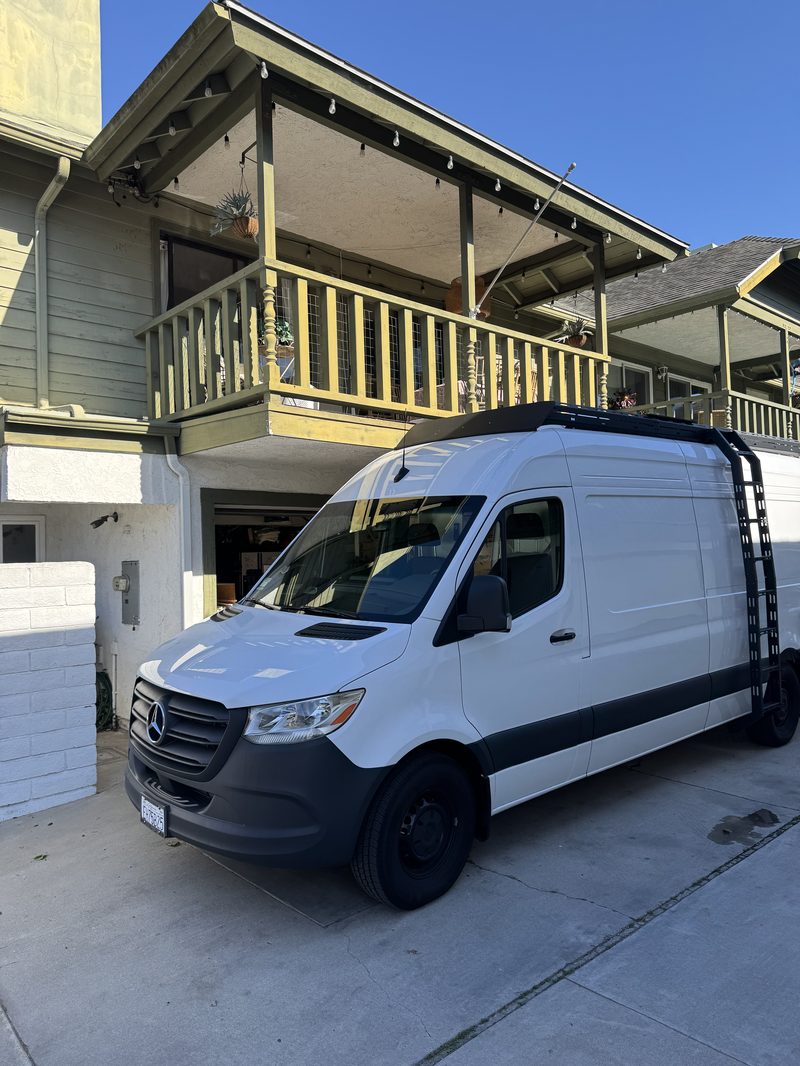
Living in North County San Diego means the ocean is part of your daily routine. Dawn patrol at Swami’s, a quick afternoon session at Cardiff Reef, weekend trips down to K38. If you’re surfing regularly along the San Diego and Baja coast, your vehicle setup matters more than you might think. A purpose-built surf van is not just a place to change out of a wetsuit. It is a mobile base camp that keeps your gear organized, your body warm after cold water sessions, and your boards safe between breaks.
We build custom van conversions here in Encinitas, so we are not guessing about what a surf van needs. We live it. This guide covers what features actually matter for a San Diego surf rig, which van platforms work best, and what a purpose-built surf conversion looks like at different price points.
What Makes a Surf Van Different from a Regular Camper Van
A lot of van builds look great on Instagram but fall apart the first time you throw a wet 5/4 wetsuit and sandy towel inside. Surf vans need to handle water, sand, salt, and constant gear cycling in ways that a weekend camping rig does not.
Here is what separates a good surf van from a generic build:
Exterior Shower
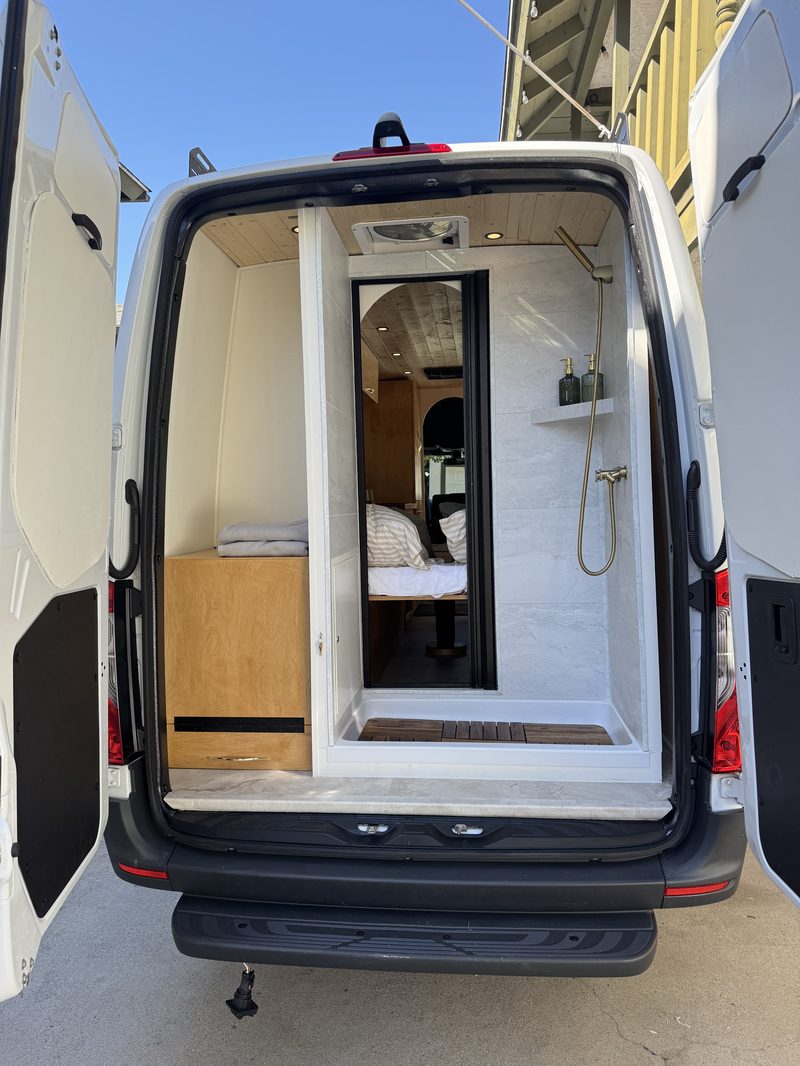
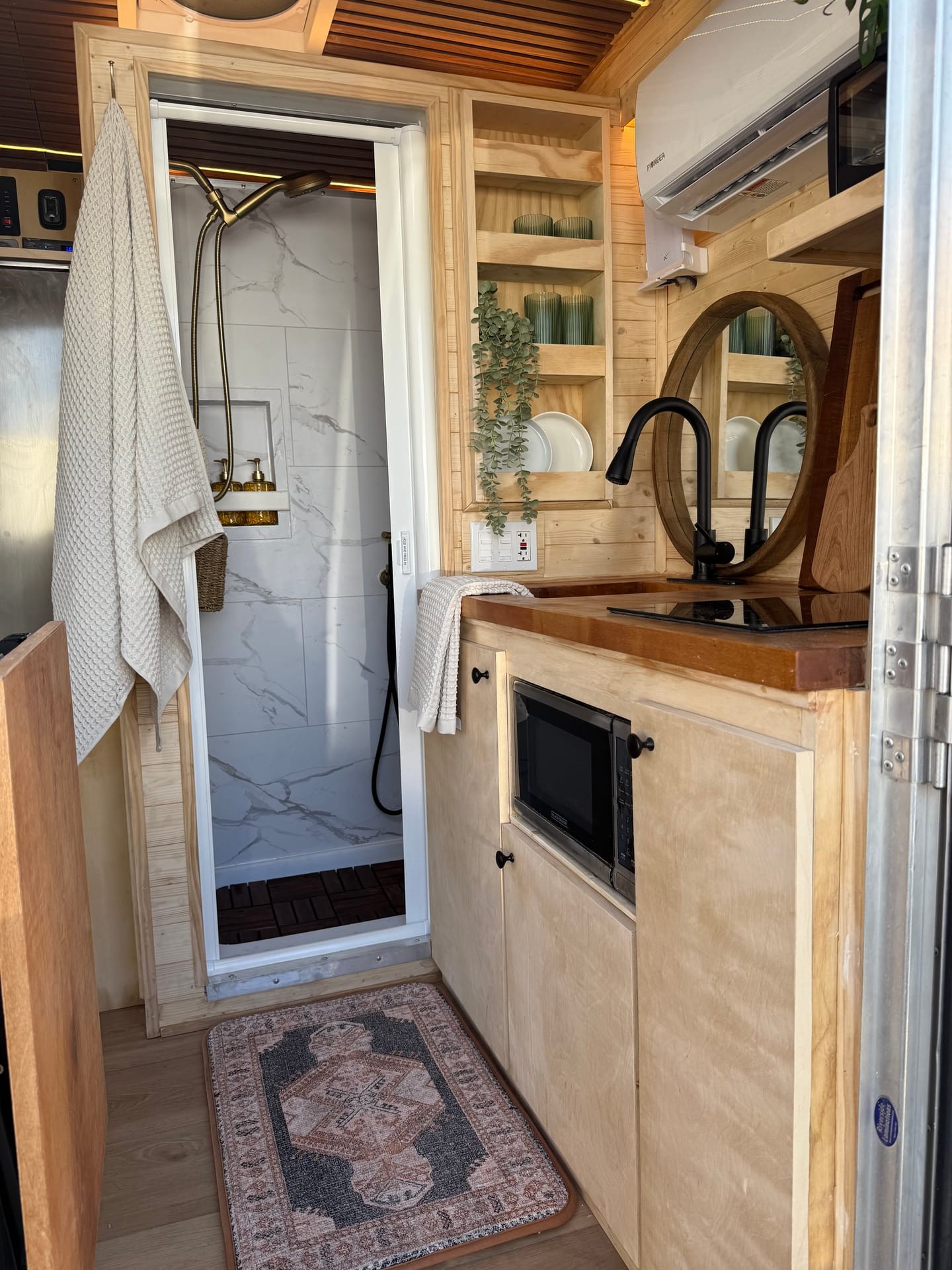
This is the single most-requested feature on every surf build we do. A hot water exterior shower mounted to the rear or side of the van lets you rinse off sand, salt, and neoprene before getting inside. We typically plumb these from the van’s main water system with a mixing valve so you can dial in the temperature. Cold rinse on a summer day, warm rinse after a January session at Sunset Cliffs. Some builds use a simple portable setup, but a permanently plumbed shower with a proper showerhead and drain area is worth the investment.
Wetsuit Storage and Drying
Tossing a wet wetsuit on the van floor is a recipe for mildew and a van that smells terrible within a week. A well-designed surf build includes a dedicated wet storage area, usually near the rear doors, with a drain pan underneath and hooks or a hanging bar. Ventilation is key here. We install fans or vented compartments that allow airflow through the wet storage zone so gear actually dries between sessions.
For extended trips, a small clothesline setup in the rear or a pull-out drying rack mounted to the door makes a real difference.
Board Storage
This is where platform choice and layout design really matter. You have three main options:
Interior ceiling racks hold boards overhead, out of the way, and protected from theft and UV damage. In a Sprinter van conversion with a 144” wheelbase, we can fit longboards up to about 9’6” with a padded ceiling rack system. Shortboards and mid-lengths are easy in almost any layout.
Interior side-wall racks are another option, especially if you want quick access without removing overhead boards. These work well for shortboards and fish shapes.
Roof racks are the go-to for oversized boards, multiple boards, or builds where interior space is tight. Thule and Yakima both make solid surf-specific rack pads. The trade-off is that boards on the roof are exposed to sun and weather, and you take a fuel economy hit from the added wind resistance.
Most of our surf builds combine interior racks for the daily driver board and roof racks for the quiver when heading to Baja.
Sand-Resistant Flooring
Ventilation for Wet Gear
A surf van generates a lot of moisture. Wet wetsuits, damp towels, humid air from the coast. Without proper ventilation, you end up with condensation, mold, and musty smells. We install MaxxAir fans or equivalent roof-mounted vent fans that pull humid air out and bring fresh air in. For the wet storage area specifically, we design airflow paths so that damp gear gets moving air even when the van is parked and closed up.
Shore Power for Beach Camping
San Diego has some of the best beachside campgrounds in California. San Elijo State Beach, South Carlsbad, and Dockweiler (up in LA for those north swell trips) all offer electrical hookups. Having a 30-amp shore power inlet on your van means you can plug in, run the AC on hot days, charge your battery bank, and power everything without worrying about solar input on overcast coastal mornings. Not every build needs it, but if you plan to spend multiple nights at beach campgrounds, it pays for itself in convenience.
Best Van Platforms for a Surf Rig
Not every van works equally well for a surf build. Here is how the three main platforms compare for this use case.
Mercedes Sprinter (144” Wheelbase)
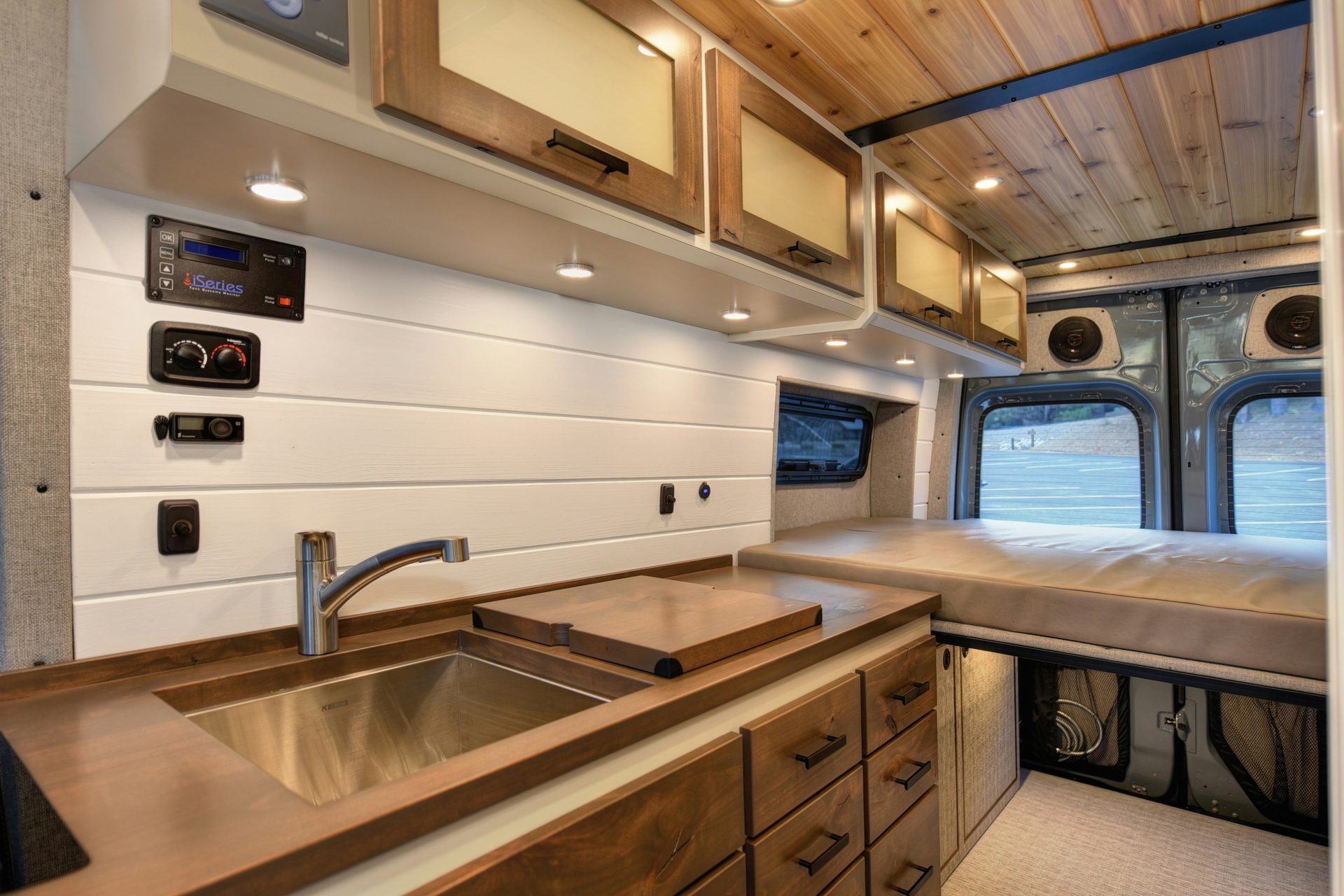
The Sprinter 144 is our most popular platform for surf builds and for good reason. The 144” wheelbase fits in a standard parking lot space, which matters when you are parking at Swami’s, Seaside Reef, or any of the tight North County lots. The high roof gives you standing height inside. The cargo area is long enough for interior longboard storage. And the Sprinter has the best resale value of any van platform, which matters if you ever sell.
The main downside is cost. Sprinters are the most expensive of the three platforms to buy, and parts and service cost more too.
Ford Transit (Medium or Long Wheelbase)
The Transit is a strong surf van platform, especially if budget is a factor. Ford parts are cheaper and more widely available than Mercedes. The Transit medium roof offers decent headroom, and the cargo area dimensions work well for board storage. The long wheelbase gives you more interior space for a dedicated wet zone.
The Transit is wider than the Sprinter, which gives you more floor space but can make tight beach parking lots trickier. Fuel economy is comparable between the two.
Ram ProMaster
The ProMaster has the widest interior of the three platforms thanks to its flat floor and boxy shape. That extra width is great for side-by-side board storage and a more open-feeling interior layout. However, the ProMaster is front-wheel drive only, which limits it if you want to add AWD capability for Baja dirt roads. It also has the lowest resale value of the three.
For a surf van that stays on paved roads and beach campgrounds, the ProMaster is a perfectly good choice at a lower entry price.
Surf Spots and How They Shape the Build
Where you surf determines what your van needs. A rig built for North County day sessions is different from one designed for extended Baja expeditions.
North County San Diego (Daily Driver)
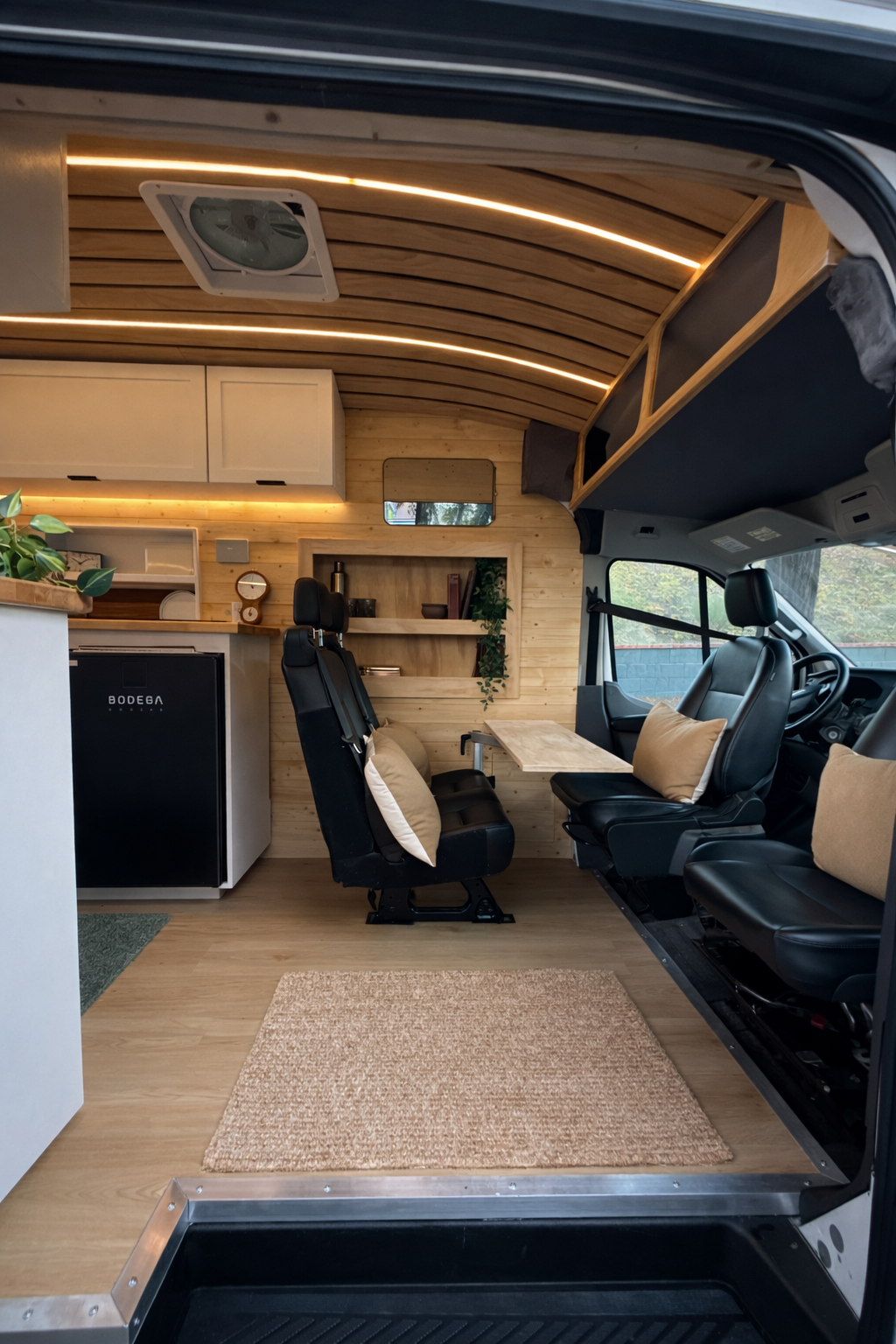
Swami’s, Cardiff Reef, Seaside Reef, Ponto, Moonlight Beach. These are the spots you hit before work or on a lunch break. The van needs to be practical for daily use: quick-access board storage, a fast rinse station, somewhere to hang a wetsuit, and enough room to change comfortably. You are not living in the van full-time, so the interior can be more focused on gear management than full-time living.
A build in the lower or middle part of that range typically covers everything a North County daily surfer needs.
South San Diego and Point Loma
Ocean Beach, Sunset Cliffs, Imperial Beach, Coronado. These spots are further from North County but worth the drive, especially during south swells. The van becomes more of a day-trip base camp. Having a small kitchen setup (a single-burner stove and a cooler or fridge) means you can make coffee and food between sessions without leaving the beach.
Baja Runs (K38, San Miguel, Ensenada, and Beyond)
This is where the build gets serious. A Baja surf trip means multiple days in the van, often without hookups or services. You need a full kitchen, a solid battery bank with solar to stay off-grid, enough water storage for drinking and showering across several days, and potentially a portable toilet solution.
Board security matters more too. A lockable interior rack system is better than leaving boards on the roof overnight in unfamiliar areas.
If you regularly cross into Baja, consider AWD capability. The roads to some of the best breaks south of Ensenada are unpaved and can get rough after rain. A Sprinter with factory AWD handles these roads well without needing a full off-road build.
For Baja-focused builds, we usually recommend budgeting toward the upper half of that range. You can review our van build budget guide for a full cost breakdown.
What a Surf Van Build Costs
Here is roughly what each budget band buys in the context of a surf-focused build (all pricing is labor and materials; vehicle not included):
| Budget band | Price | What’s Included |
|---|---|---|
| Smaller build | $30K–$50K | Interior board racks, marine vinyl flooring, basic insulation and wall panels, a simple bed platform with storage underneath, a portable exterior shower setup, and a roof vent fan. A clean, functional surf rig without a full kitchen or complex electrical system. |
| Mid-range build | $55K–$75K | All of the above plus a plumbed hot water exterior shower, dedicated wet storage compartment with drain and ventilation, a full galley kitchen with fridge and stove, a proper electrical system with lithium batteries and solar, shore power hookup, and upgraded interior finishes. The sweet spot for most surfers who want a van they can also take camping. |
| Higher-end build | $80K–$120K+ | Custom cabinetry, high-end materials, a large battery bank with inverter, full plumbing with indoor and outdoor showers, hot water heater, air conditioning, and every comfort feature you can fit. For people who want a surf van that doubles as a legitimate home on wheels. |
Want to talk through what the right build looks like for how you surf? Check out our process or get in touch and we will put together a plan.
Why Work with a Local San Diego Builder
There are van builders all over California, and plenty of people doing DIY conversions. Here is why working with a shop based in North County makes sense for a surf van.
We know these breaks. We know what the parking situation is at Swami’s on a Saturday morning. We know that you need a van that fits in the Cardiff lot. We know that the morning marine layer means your solar panels might not produce much until 10 AM, which affects how you size a battery bank. We know what Baja roads do to a van because we have driven them.
That local knowledge translates into build decisions that someone in another state would not think about. The shower placement, the board rack dimensions for the shapes people actually ride here, the electrical system sized for coastal weather patterns.
If you are in the San Diego area and thinking about building a surf van, come by the shop. We are happy to walk through what a build looks like for your specific setup and budget. You can see how we handle van conversions across San Diego County, including pricing and build timelines, or reach out here and let’s figure it out together.