Camper Van Water Heater: Electric or Diesel, and Why
How to choose a camper van water heater based on how you actually use the van. Shore power electric versus diesel fired, and what each costs elsewhere.
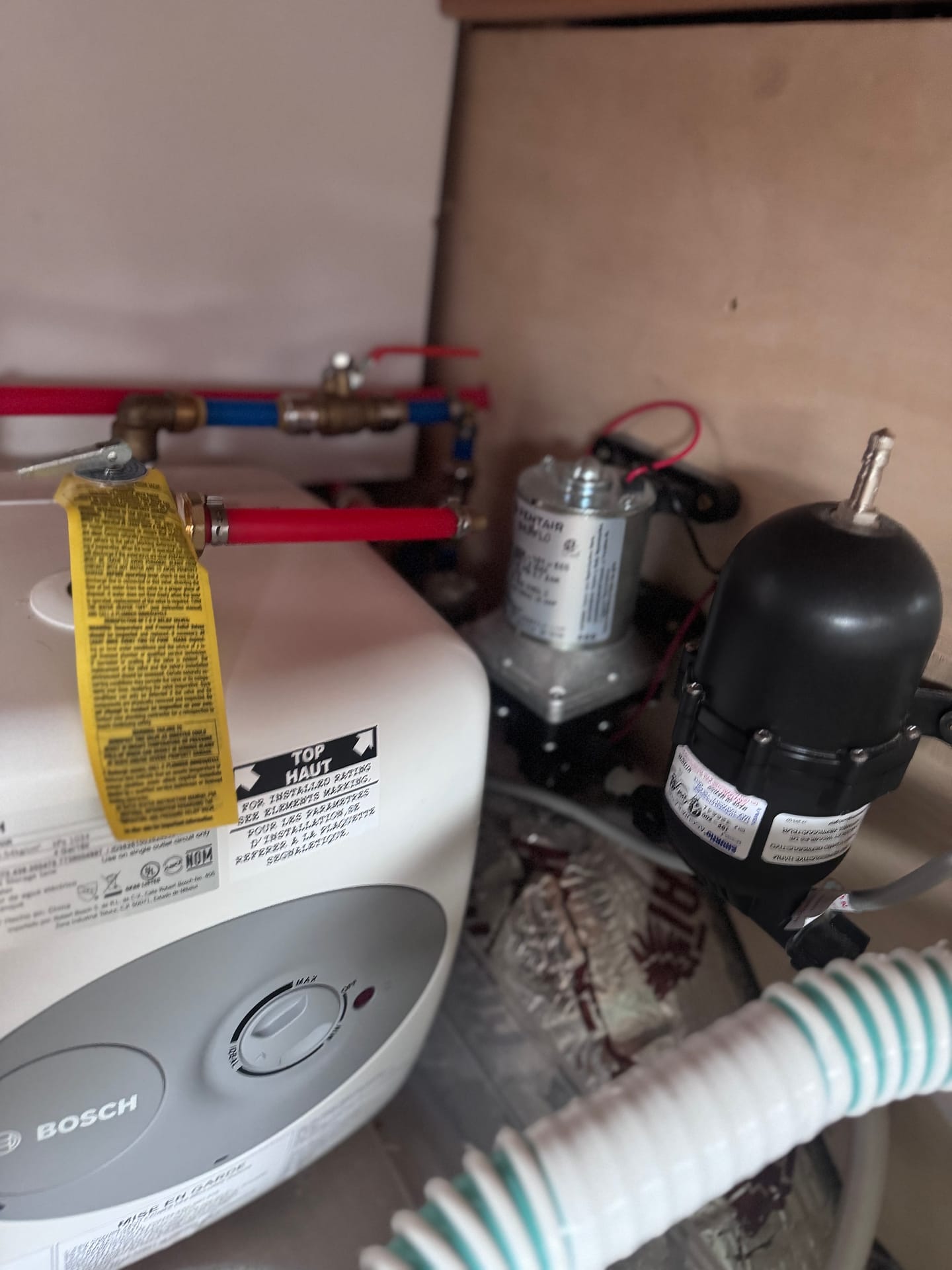
Every few months a manufacturer launches a water heater that is supposed to settle this question for good. The current one is a fully electric RV unit that runs on shore power only, and industry reports have it positioned as the simple choice: no combustion, no gas line, no venting. It is a good product. It also answers a question most people have not asked yet.
The question is not propane or electric. The question is how you are going to use the van. Answer that honestly and the heater picks itself.
Start with how the van gets parked
There are really two kinds of van owners, and they want opposite things from a water heater.
The first parks at campgrounds, RV parks, friends’ driveways, and the occasional hotel lot with an outlet. Shore power is available most nights. For that person, an electric heater is close to perfect. It is quiet, it has no exhaust, nothing to vent, and nothing extra to refill.
The second parks in a dispersed site in the desert for four days and does not see an outlet the entire time. For that person, an electric water heater is a slow leak in the battery bank.
Most people I talk to think they are the first and turn out to be the second. That is worth being honest about before we spec anything.
The electric side: EcoSmart ECO MINI 4
On builds that spend real time plugged in, we spec the EcoSmart ECO MINI 4. It is our entry tier heater and it does exactly what it should. It is compact, it fits under a counter or in a cabinet bay, and there is no combustion anywhere in the van.
The catch is watts. Electric tankless heating is one of the hungriest loads you can put in a conversion, in a different category from your fridge, your fan, or your lights. Those are measured in watts. This is measured in kilowatts. Plugged in, that is free. Running off the bank, every shower is a real subtraction.
We build every electrical system around a Victron 3000W inverter and charger, Victron MPPT solar, and a Victron Orion DC-DC charger pulling from the alternator, paired to a Renogy lithium bank sized to the build. That is a strong system. It is still a van, and a van roof only holds so much solar. More on why we standardized on that gear is on our why Victron page.
The fuel fired side: Aqua-Hot 125
For builds that spend most of their nights away from power, we spec the Aqua-Hot 125. It is a combi unit, which means it handles domestic hot water and hydronic cabin heat from the same box, running off the van’s own fuel tank.
It has to match your engine
Most van content calls these diesel heaters, and that name causes real confusion. The unit taps the vehicle’s own fuel supply, so the fuel is decided by the van, not chosen. A Sprinter is diesel and takes the 125D. A ProMaster or Transit is gasoline and takes the 125G. Same unit, same job, different burner. If someone quotes you a diesel heater for a gas van, that is a mistake and it is worth catching before it is installed.
The other reason we landed on the Aqua-Hot is altitude. It adjusts its air and fuel mix for elevations up to 16,000 feet, which matters if the van is going anywhere near a ski resort. Altitude is exactly where combustion heaters run dirty and get unreliable. It also has an electric element, so when you are plugged in it heats on shore power instead of burning fuel out of your tank.
That last part is the whole argument. There is no second fuel to source. No tank to swap, no locker to build, no propane run to make in a town you do not know. You fill the van, and the van heats itself and your water.
It is the premium tier for a reason. It costs more up front and it takes more labor to install, because a combi is a heating system, not an appliance you drop in. But it removes the tradeoff entirely: long hot showers with no hookup and no anxiety about state of charge.
If the van needs cabin heat anyway, and in a lot of builds it does, one combi unit doing both jobs is often the more sensible package. Our take on diesel cabin heat is on the why Espar page, and the full breakdown of how we plumb and size hot water lives on our water heating page.
Where propane fits
Propane water heaters work. They are common in the RV world and there is nothing wrong with the technology.
What they bring with them is a system. A tank that has to live somewhere, a vented locker built to code, a gas line run through the van, connections that get inspected, and a refill schedule that follows you around. In a large motorhome with a factory propane bay, that infrastructure already exists and the heater is nearly free to add. In a one-off van conversion, you are building all of it from scratch for one appliance.
That is why we default to electric or fuel fired rather than propane for hot water. Neither of our two standard heaters runs on it. If you have a specific reason to want propane in your build, bring it up early and we will work through whether it earns its keep.
The mistake to avoid
The expensive version of this decision is picking the appliance first.
Someone reads about a heater, likes it, and asks for it by name. We spec it. Then, halfway through, the real use pattern comes out: they are going to spend most of their time off grid. Now the battery bank is undersized for the heater they picked, and fixing it means more lithium, more solar, sometimes a different alternator charging setup. The heater was never the expensive part. Everything it dragged behind it was.
Sequence it the other way. Decide how the van gets used. Size the electrical system to that. Then the water heater is an obvious conclusion instead of a constraint you have to build around.
What this looks like in a real build
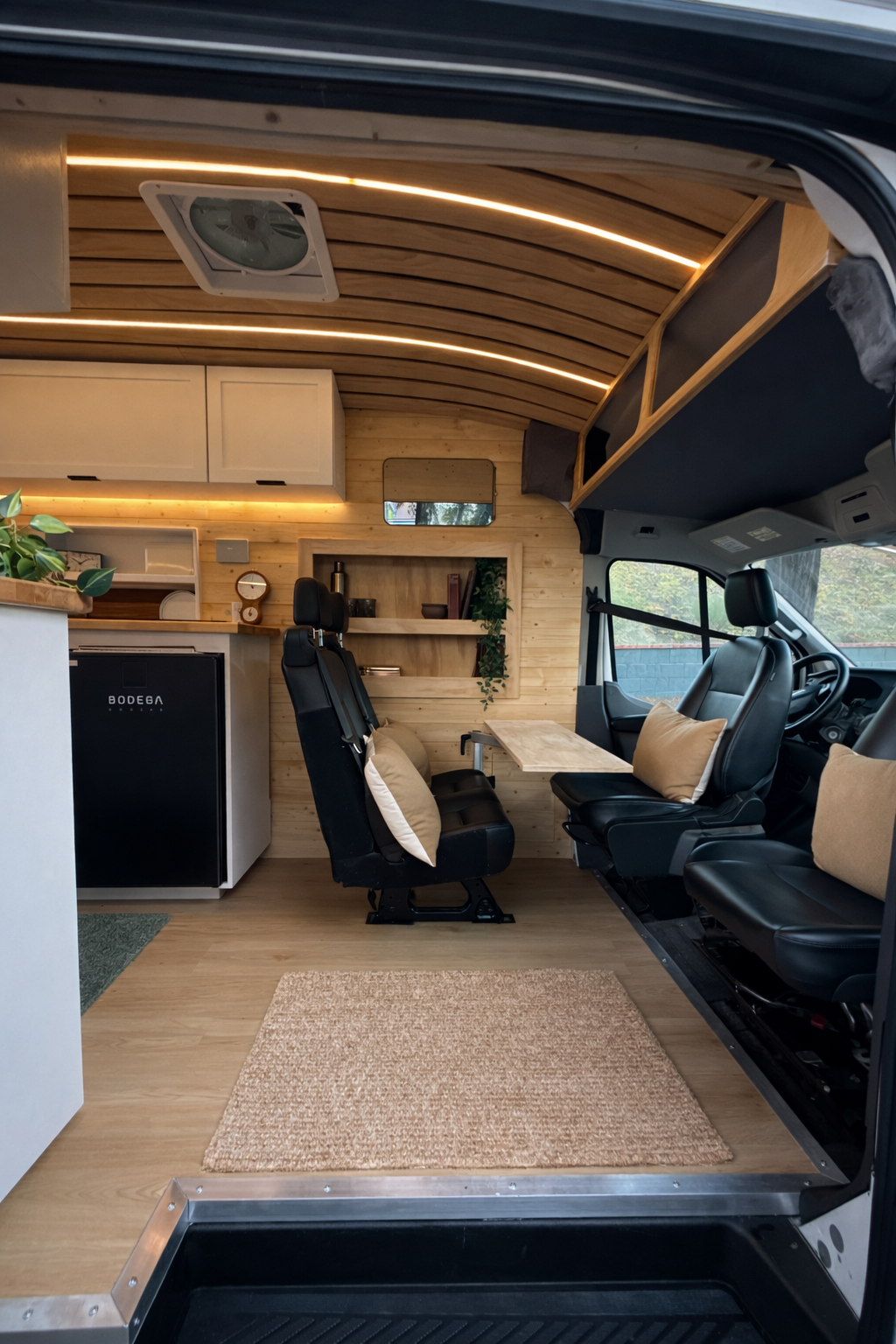
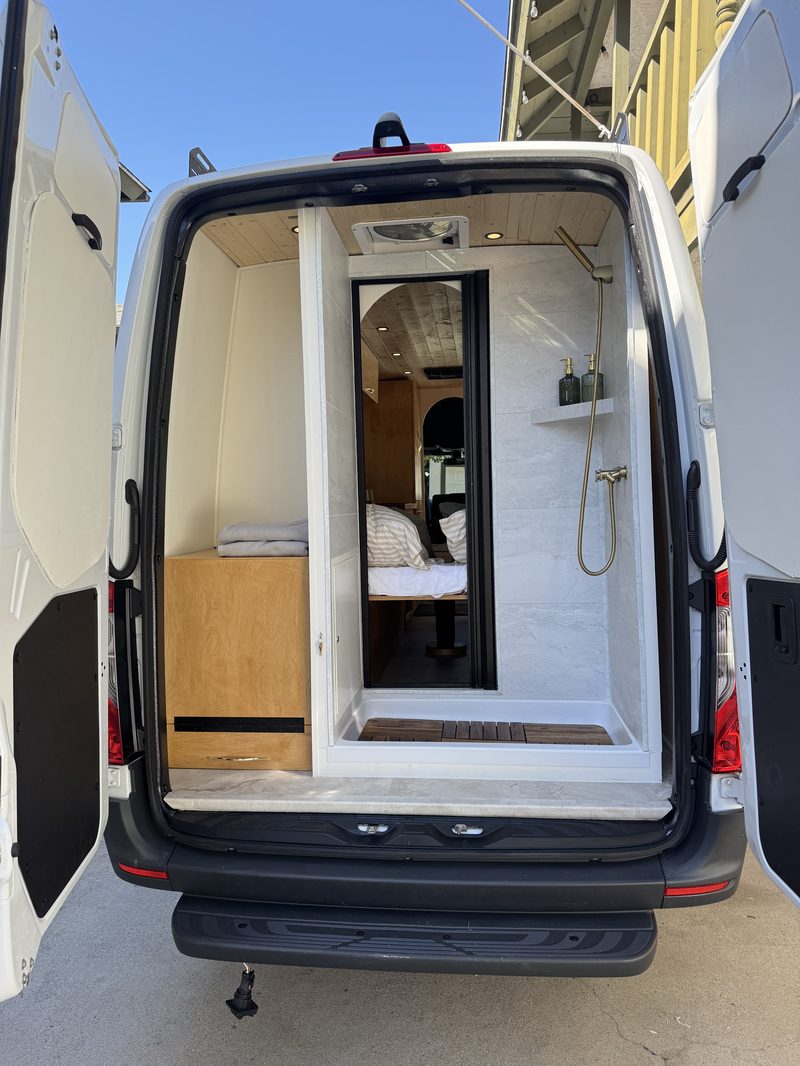
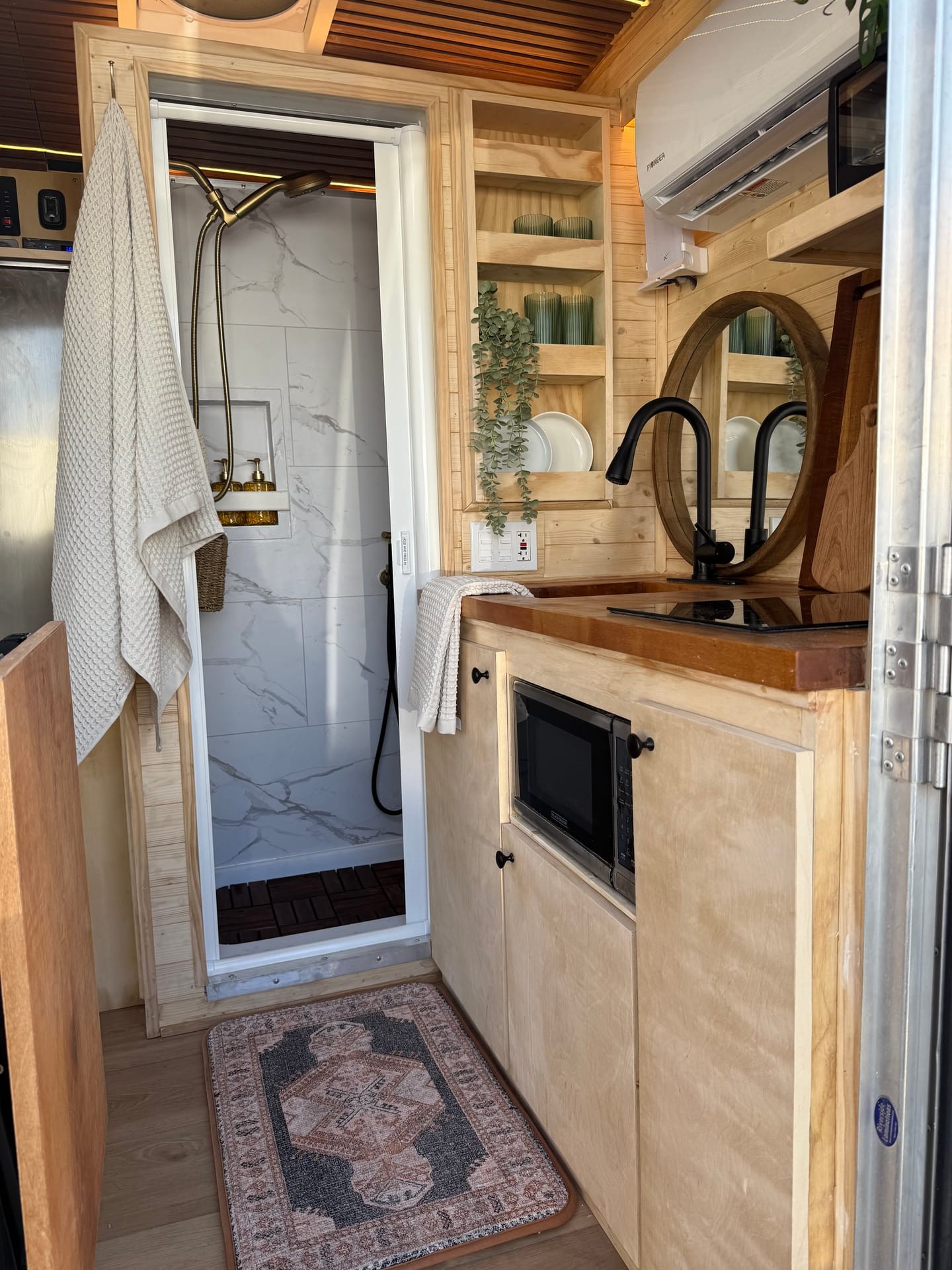
Across our Sprinter, Transit, and ProMaster conversions, the split falls out pretty cleanly. Weekend and hookup heavy use gets the electric unit and a bank sized for normal loads. Extended off grid use gets the fuel fired combi and a bank sized for everything else, since hot water is no longer competing for it.
Both are correct builds. They are correct for different people, and the only way to know which one you are is to be straight about how the van will actually get used, not how you picture using it.
You can see finished examples of both approaches in our work, and if you want to see how the choice moves the total, the van build budget guide walks through where the money goes.
When you are ready to talk specifics, get in touch. Tell me where you plan to park, and we will work backward from there.