Partial Van Conversions: The Third Path for DIY Builds
You do not have to choose between building your van alone and handing over the whole project. Here is how a partial van conversion actually works.
Most people researching a van build believe they have two options. Build it yourself across eighteen months of weekends, or hand over the keys and $30,000 to $120,000 and pick the van up finished. Both are real paths and plenty of good vans come out of each one.
There is a third path, and it is the one nobody advertises. You do part of the work. A shop does the rest. Industry reporting this month covered exactly that arrangement on a towable build, where the owner wired most of the system himself and then brought the rig in so a shop could check his work and finish the install. That model is far more common than the two-option version of the decision makes it look.
The part that decides whether it goes well is not skill. It is where you draw the line, and whether you draw it before anyone picks up a tool.
What a partial build actually looks like
A partial build is not a rescue mission. It is a plan with a seam in it.
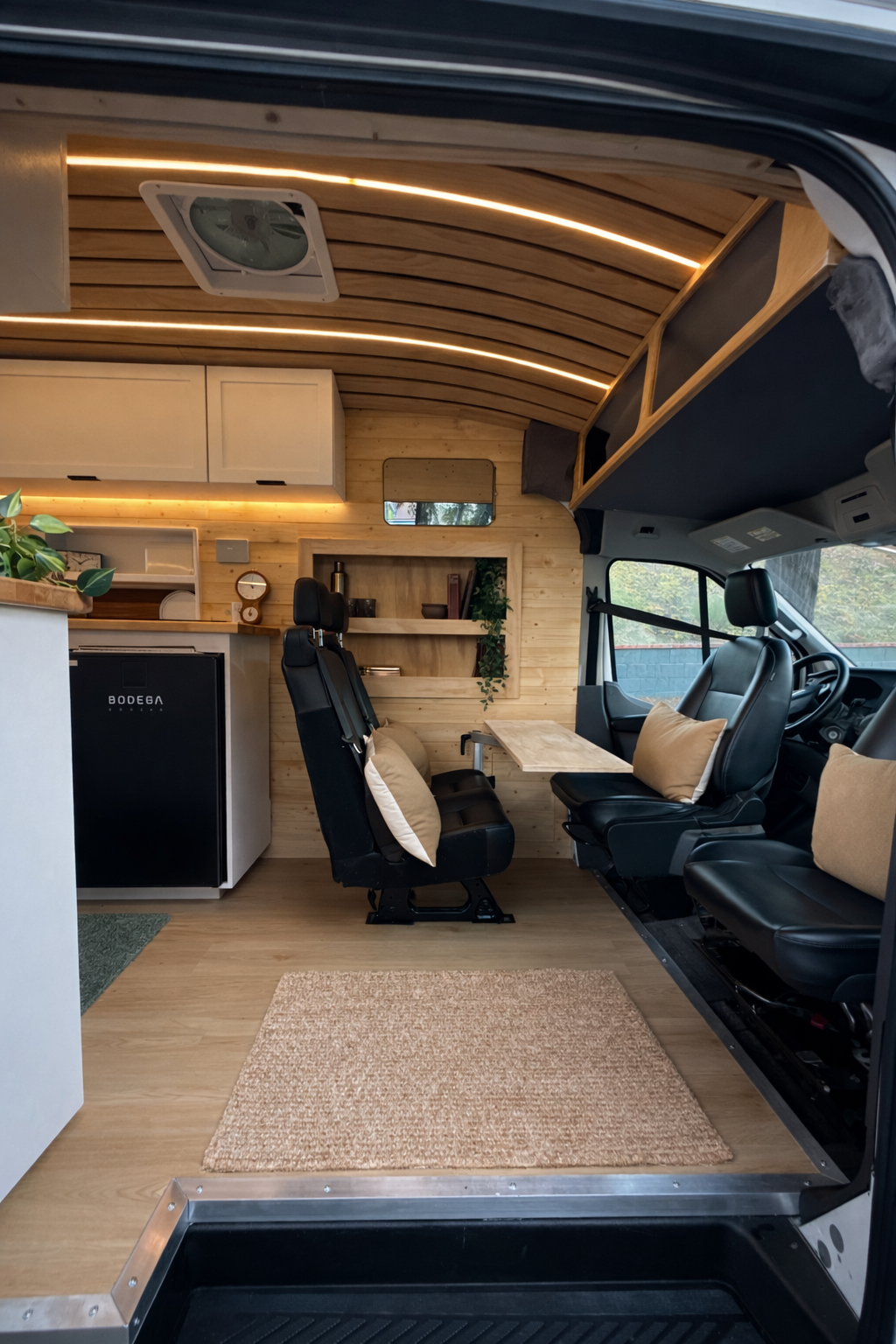
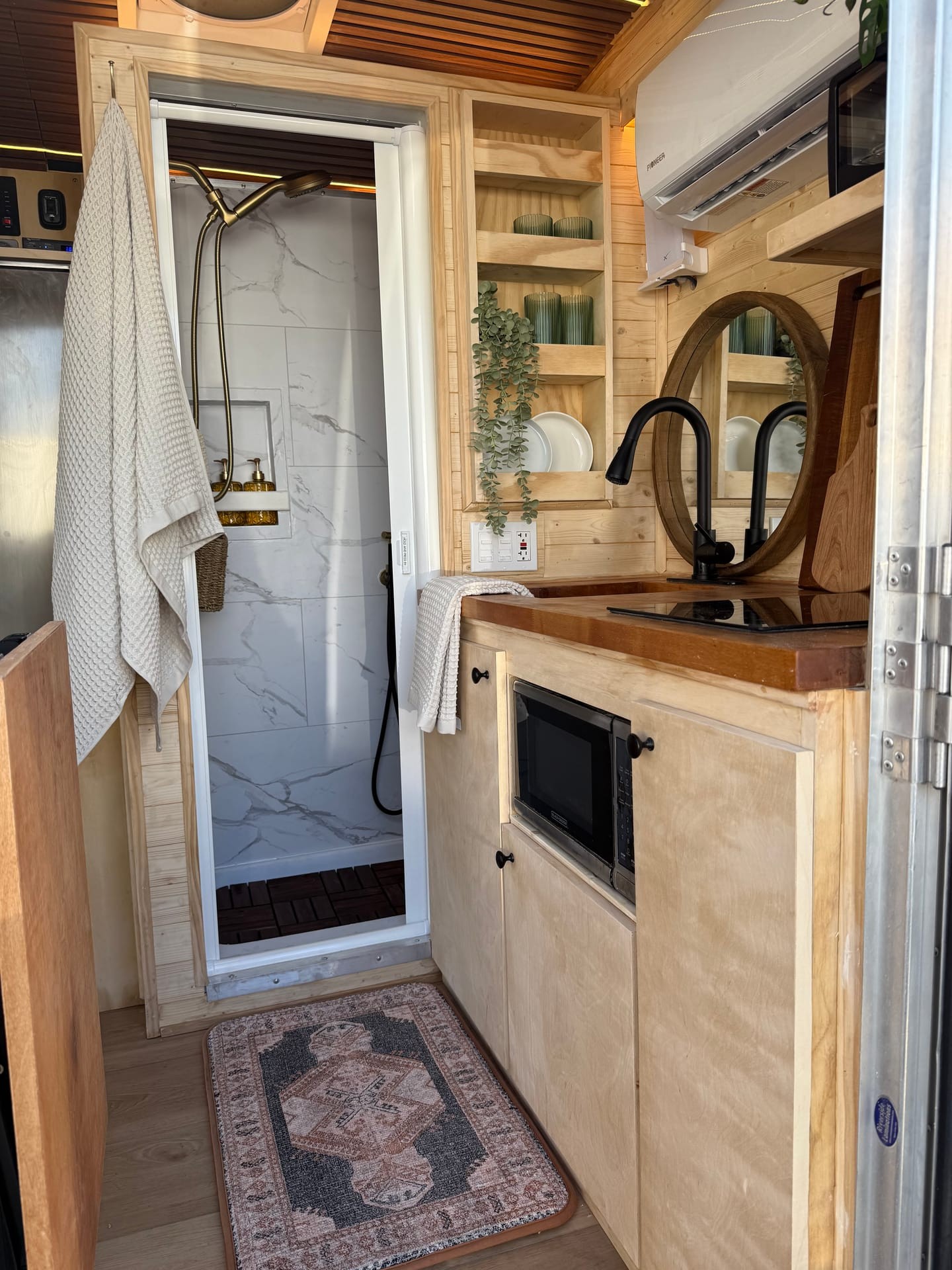
The usual shape: the owner takes on the work that is visible, forgiving, and satisfying to do. Cabinet carcasses, face frames, trim, paint, bed platform, upholstery decisions. The shop takes the systems that are buried behind walls and expensive to redo. Electrical, plumbing, insulation, ventilation, heat.
We also do single system installs, which is the narrower version of the same idea. One system, done properly, inside a van you are otherwise building yourself.
Either way the split gets written down first. A partial build that fails almost always failed at the seam, because two halves were designed in isolation and met in the middle at a wall that needed to be in two places at once.
The systems that punish mistakes hardest
If you only hand off one thing, hand off the electrical.
A van electrical system is not hard to make work. It is hard to make safe at every load, in every temperature, for years. We build around a Victron 3000W inverter/charger, Victron MPPT solar charging, and a Victron Orion DC-DC charger pulling off the alternator, paired with a Renogy lithium bank sized to how the van actually gets used. Trip length, what you run, how much driving and sun you get. That sizing conversation is most of the engineering, and it is the part that gets skipped in a DIY build because it is invisible on a parts list. Here is why we spec Victron.
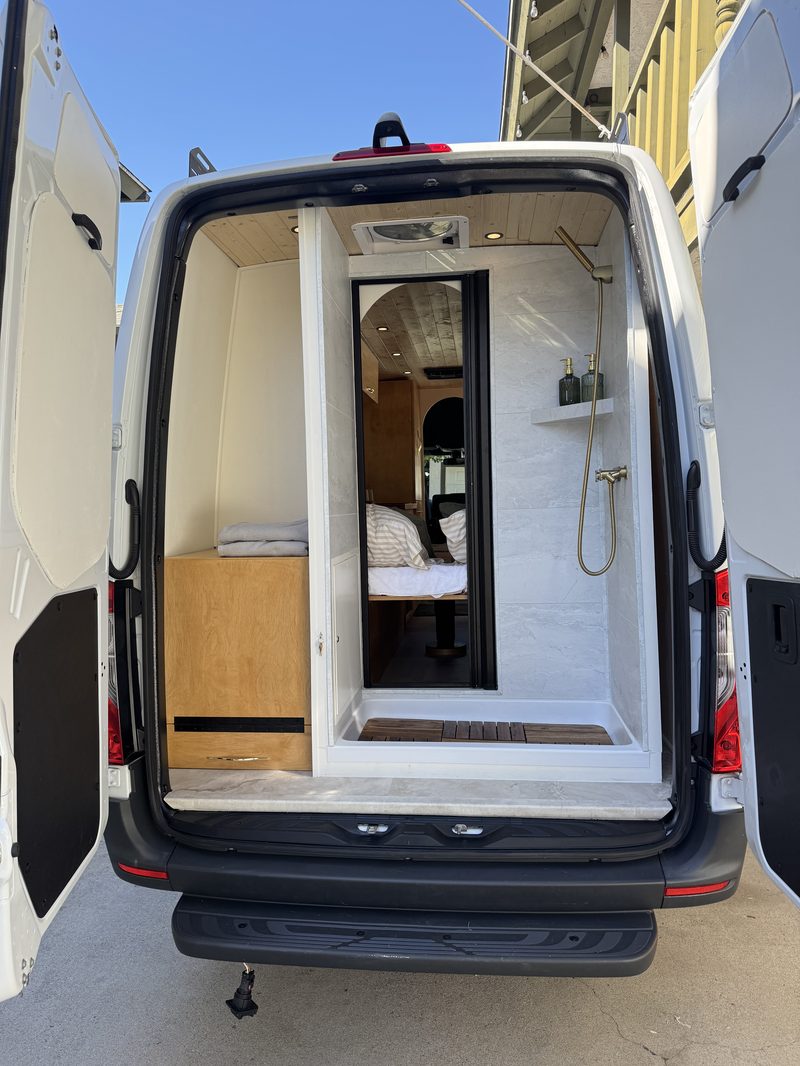
Plumbing is second, for a plainer reason. A bad connection behind a wall does not announce itself. It rots a floor quietly for a year.
Insulation is third, and it is the one people underestimate because it looks like stuffing a wall. We use 3M Thinsulate AU6002 on walls and ceiling with XPS rigid foam on the floor. Thinsulate is not the highest R value per inch available. At 1.73 inches it comes in around R-5.45 total, roughly R-3.2 per inch, which is under XPS and well under polyiso. We use it because it handles the moisture a van generates every night without a vapor barrier trapping that moisture against cold metal. The full reasoning is here.
The work that rewards doing yourself
Cabinetry is the obvious one. It is forgiving, it is visible, and it is the part of the van you will point at when someone asks what you built.
Trim, paneling, and finish carpentry are the same. So is anything you might want to change your mind about in two years, because the things you build yourself are the things you are willing to rebuild.
Ventilation sits on the line. We install MaxxAir fans, and a fan is a straightforward install right up until it is a hole in your roof. That one comes down to how you feel about cutting metal you cannot uncut.
Where parts and warranty draw the line
This is the question that actually decides the shape of a partial build, so it is worth asking early.
We accept customer-supplied parts on standalone installs. The part cost comes off the quote and the install labor stays. That is a fair trade and it is a real way to use a deal you already found.
Inside a full system we are warrantying end to end, the parts come from us, because we are putting our name on how the whole thing behaves together. Our workmanship warranty runs one year, with the manufacturer warranty passed through on parts. A warranty on a system means a warranty on the system as specified, which is why the two cases get handled differently.
Sequence matters more than skill
The most common partial build problem is not bad work. It is good work done in the wrong order.
Wire runs go in before walls. Walls go in before cabinets. Plumbing runs want to be decided before the bed platform is framed, because the bed platform is usually sitting on top of where the water wants to go. If you build the cabinets first because cabinets are the fun part, you have made every system decision after that harder and some of them impossible.
So the sequence conversation happens before the split conversation is final. Sometimes it moves the line. A customer planning to do their own cabinetry might end up doing it after our systems work rather than before, and that single change is the difference between a clean build and a frustrating one.
If your build is already underway, the honest version of this is simpler: the earlier you ask, the more options are still open. Send photos with the panels off.
How this compares to going all the way in either direction
We have written the straight cost and quality comparison of DIY versus a professional build separately, and that page is the right read if you are still deciding between the two endpoints.
This page is about the middle, which exists for a specific kind of person. Someone who wants to build, has the time and the tools for part of it, and does not want the systems that carry real risk riding on a first attempt. That is a good instinct and it deserves a real option rather than a compromise.
You can see what our finished builds look like to get a sense of the standard the systems half gets held to.
If that sounds like your build, tell us what you are planning. We are in Encinitas, CA, and the first conversation costs nothing.